

Wheel Dozer: Earthwork Maestro Shaping the Construction Landscape
Release time:
2025-06-30
Author:
Source:
Abstract
In the vast arena of construction, where the transformation of raw land into functional spaces is a complex and arduous task, the wheel dozer stands as an earthwork maestro, playing a pivotal role in shaping the construction landscape. This versatile and powerful piece of heavy equipment is a cornerstone of earthwork operations, enabling efficient site preparation and material handling.
The wheel dozer, characterized by its large, sturdy wheels and a front-mounted blade, is engineered for a multitude of earthwork tasks. The blade, which can be adjusted both vertically and horizontally, serves as the primary tool for pushing, grading, leveling, and excavating various materials, including soil, sand, gravel, and even debris. Its design allows it to move with agility across different terrains, from soft soil to rocky surfaces, making it highly adaptable to diverse construction environments.
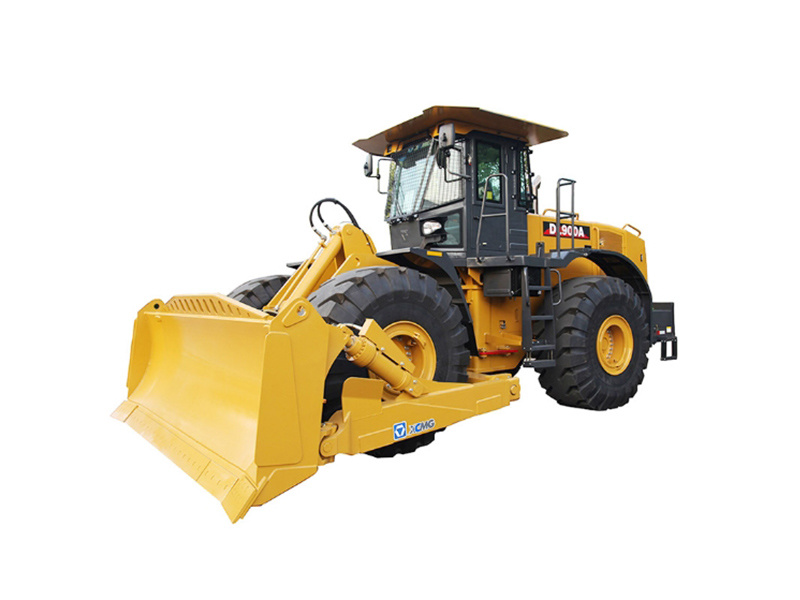
One of the key advantages of the wheel dozer is its speed and mobility. Compared to tracked dozers, wheel dozers can travel at higher speeds, covering large distances in a relatively short time. This speed is invaluable in construction projects that require rapid site clearing and preparation. For example, in the initial stages of a new building project, a wheel dozer can quickly remove vegetation, rocks, and other obstacles from the site. It can then proceed to level the ground, creating a stable base for further construction activities. This rapid site preparation not only saves time but also sets the stage for the seamless integration of other construction equipment, such as the stationary concrete pump, telescopic crane, and soil compactor.
The wheel dozer's versatility extends beyond site clearing and leveling. It can also be used for material handling on the construction site. It can push large quantities of soil or aggregate to designated areas, facilitating the construction of roads, embankments, and other earth-based structures. In some cases, it can even assist in the loading of materials onto trucks, working in tandem with a telescopic crane to ensure efficient transportation of materials within the site.
Moreover, the wheel dozer plays a crucial role in coordinating with other construction machinery. After the wheel dozer has prepared the site, a soil compactor can be brought in to compact the soil, increasing its density and stability. This compacted soil provides a solid foundation for the construction of buildings and other structures. Subsequently, a stationary concrete pump can be set up to pour the concrete for the foundation and other structural elements, while a telescopic crane can be used to lift and position heavy components. This coordinated effort between different types of equipment, with the wheel dozer leading the way in earthwork, is essential for the successful completion of a construction project.
In terms of operator comfort and safety, modern wheel dozers are equipped with advanced features. Operator-friendly cabins with ergonomic controls and excellent visibility enhance the efficiency of the operator while minimizing fatigue. Additionally, safety features such as anti-rollover protection systems and backup cameras ensure the safety of the operator and those working around the equipment.
In conclusion, the wheel dozer is an earthwork maestro that shapes the construction landscape with its speed, versatility, and coordination capabilities. Its ability to work in harmony with other construction equipment like the stationary concrete pump, soil compactor, and telescopic crane makes it an indispensable part of any construction project, driving the transformation of raw land into functional and sustainable structures.
Recommended Reading
How Compaction Machinery Accelerates Project Completion in Engineering and Construction
2026-10-15
Understanding Gantry Cranes: Essential Insights for Industrial Professionals
2026-10-12
Exploring Different Types of Plate Compactors and Their Uses
2026-10-09

Changsha Runsun Industrial Equipment Co.,Ltd
Address:
No.5-1-401# Chutian Building. Kaiyuan Rd, Changsha Hunan P.R.C
Jerry Xu:
Tel/Whatsapp:+86 15116181826
Email: jerryxqx@qq.com
Bruce Tang :
Tel/Whatsapp:+86 18153792825
Email: 114116432@qq.com
Libby Hu
Tel/Whatsapp:+86 13975100742
Email: libbyhu2977@outlook.com


