

Telescopic Crane: The Sky's the Limit in Lifting Operations
Release time:
2025-06-26
Author:
Source:
Abstract
In the dynamic world of construction and heavy-duty operations, the telescopic crane stands as a symbol of versatility and power. With its unique telescoping mechanism and impressive lifting capabilities, this remarkable piece of equipment has transformed the way heavy materials are lifted and maneuvered, making it an essential asset on construction sites, industrial facilities, and various other projects.
The defining feature of the telescopic crane is its telescoping boom, which can extend and retract to reach different heights and distances. This flexibility allows the crane to perform a wide range of lifting tasks with ease. Whether it's hoisting heavy steel beams to the upper floors of a skyscraper, placing large pre-fabricated components in a construction project, or assisting in the maintenance of tall structures, the telescopic crane can adapt to the specific requirements of the job at hand.
One of the key advantages of the telescopic crane is its mobility. Mounted on wheels or tracks, these cranes can be easily transported from one location to another, enabling quick deployment across different job sites. This mobility is a significant benefit in construction, where projects often require the crane to be moved to various areas within the site or even to different sites altogether. For example, in a large-scale construction project that involves multiple buildings or structures, a telescopic crane can be efficiently moved to each location as needed, saving time and costs associated with setting up multiple cranes.
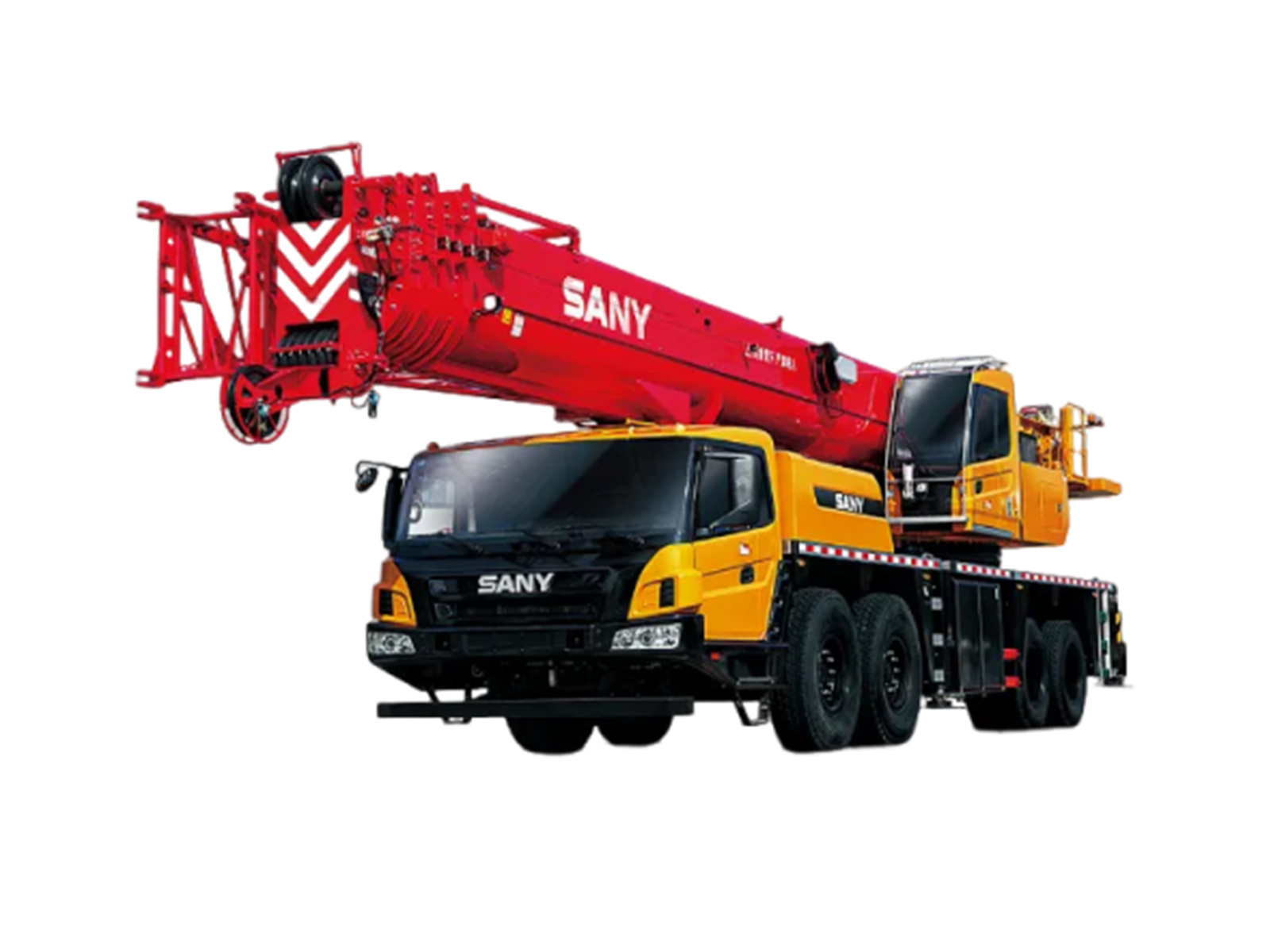
The telescopic crane also works in close collaboration with other construction equipment. In a typical construction scenario, a wheel dozer may first prepare the site by clearing the area and leveling the ground. Once the site is ready, a stationary concrete pump can be used to pour the concrete for the foundation and other structural elements. Meanwhile, the telescopic crane can lift and position heavy construction materials, such as steel columns and large pipes, with precision. After the construction is completed, a soil compactor can be employed to compact the soil around the structure, ensuring its stability. This seamless integration of different construction equipment, with the telescopic crane playing a crucial role in the lifting operations, is essential for the successful execution of a construction project.
Modern telescopic cranes are equipped with advanced technologies to enhance safety and performance. Features such as load moment indicators, anti-two-block systems, and remote control operation not only improve the accuracy of lifting operations but also reduce the risk of accidents. These safety-focused technologies provide operators with real-time information about the crane's load capacity, boom position, and other critical parameters, allowing for more informed decision-making during lifting operations.
In addition to construction, telescopic cranes have found applications in various other industries. In the oil and gas sector, they are used for the installation and maintenance of offshore platforms and onshore facilities. In the transportation industry, they assist in loading and unloading heavy cargo. Their adaptability and lifting power make them a valuable asset in any situation that requires the movement of heavy objects.
In conclusion, the telescopic crane truly lives up to the saying "the sky's the limit" in lifting operations. Its telescoping capabilities, mobility, and compatibility with other construction equipment like the wheel dozer, stationary concrete pump, and soil compactor make it an indispensable part of modern construction and a wide range of industrial applications, enabling the completion of complex projects with efficiency and precision.
Recommended Reading
How Compaction Machinery Accelerates Project Completion in Engineering and Construction
2026-10-15
Understanding Gantry Cranes: Essential Insights for Industrial Professionals
2026-10-12
Exploring Different Types of Plate Compactors and Their Uses
2026-10-09

Changsha Runsun Industrial Equipment Co.,Ltd
Address:
No.5-1-401# Chutian Building. Kaiyuan Rd, Changsha Hunan P.R.C
Jerry Xu:
Tel/Whatsapp:+86 15116181826
Email: jerryxqx@qq.com
Bruce Tang :
Tel/Whatsapp:+86 18153792825
Email: 114116432@qq.com
Libby Hu
Tel/Whatsapp:+86 13975100742
Email: libbyhu2977@outlook.com


